ASL Meaning in Text: A Complete Guide to Understanding This Popular Slang
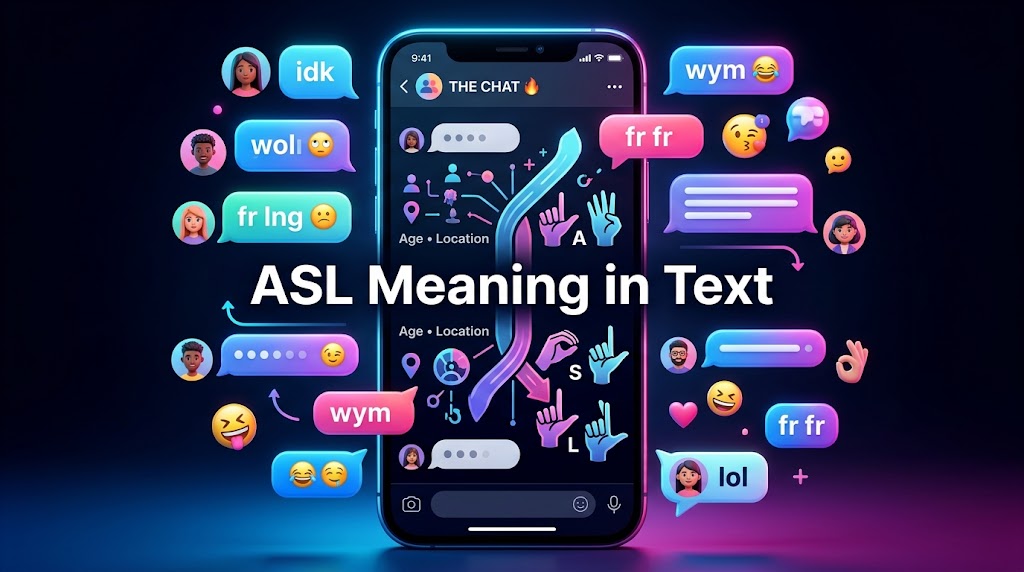
The acronym “ASL,” which stands for “Age, Sex, Location,” has rapidly established itself in online chats and dating apps. Originally popularized in the early days of internet chat rooms, ASL serves as an efficient method to start a conversation. As language continues to transform in our fast-paced digital age, understanding the meaning behind terms like ASL becomes essential. Embracing such slang improves our interactions and opens doors to deeper conversations.
What Does ASL Meaning in Text?
In the times of digital communication, “ASL” has a meaning of “Age, Sex, Location” which is a short-form that is commonly used in chat rooms and social media to break the ice and start conversations. It’s a sentence used in casual online chats to reveal basic personal information.
Beyond its traditional usage, ASL may refer to “American Sign Language,” especially in discussions about accessibility in communication. Whether in a dating chat or a casual group conversation, understanding the implications of such acronyms can create better communication and avoid misunderstandings that arise from context. For instance, among younger users, it might be seen as a harmless icebreaker, while in more formal settings, it may strike the wrong tone entirely.

The Origin of ASL in Online Communication
The origins of ASL in online communication can be traced back to the days of early internet chatrooms, where the acronym quickly became famous in digital exchanges. Emerging from the old days of AOL Instant Messenger (AIM) and other instant messaging platforms, ASL — standing for Age, Sex, Location — offered a compact way for users to introduce themselves in a space that required quick responses.
As technology advanced, the usage of ASL extended beyond chatrooms to texting and social media. Despite its simplicity, the impact of ASL as an abbreviation showed the potential of this digital slang as an introductory phrase to create our online identities and make interactions.
Different Meanings of ASL in Text
The abbreviation “ASL” has changed into a versatile term in modern digital communication, making it a prime example of how context shapes meaning. In the realm of casual texting and social media, ASL typically stands for “age, sex, location,” a common phrase that facilitates quick introductions in online chatrooms. This usage reflects an informal tone and intent, often found in spaces like gaming or dating apps.
ASL also stands for “American Sign Language,” representing an expressive communication mode for the deaf community. For instance, using “ASL” in a professional setting may confuse participants, as they may assume a casual conversation when in fact, they should be addressing accessibility issues.

How to Identify the Correct Meaning of ASL
Consider how slang and abbreviations spread online — without clear capitalization or punctuation, a sign might be read differently based on the audience’s familiarity of age-sex-location (ASL). For example, a sign interpreted as playful banter among friends may be taken literally by a stranger. Thus, ensuring clarity through shared context and direct questioning for clarification is crucial to navigating the complexities of ASL.
Examples of ASL in Text Conversations
In various contexts, such as social media interactions or casual group chats, the usage of ASL-inspired abbreviations can lead to engaging replies, though they may also spark misunderstandings.
- ASL = Age, Sex, Location
A: “Hey, ASL?”
B: “19, male, Congo.” - ASL = American Sign Language
A: “Do you know ASL?”
B: “Yeah, I’ve been learning American Sign Language for two years.” - ASL = As Hell
A: “That movie was scary ASL 😭”
B: “FR, I couldn’t sleep afterward.”
Why People Still Use ASL Today
Platforms like Snapchat, Reddit, and Omegle work on the principles of strangers that explore where ASL is embodied. In an era when Gen Z and millennials seek to connect with online friends or strangers, age, sex, and location can serve as key conversation starters, often leading to deeper engagement beyond superficial small talk. These abbreviated prompts appeal to our fast-paced, digital-slash-culture, enabling spontaneous chat and quick messages that fit within the rhythm of TikTok trends and meme exchanges.
Is It Safe to Respond to ASL?
Responding to inquiries like “ASL?” (age, sex, location) in online chats can seem harmless, but it’s crucial to approach this with caution. The anonymity of platforms like Snapchat, Reddit, and Omegle allows users to interact with strangers, but it also opens the door to various risks such as scams, catfishing, and even harassment. It’s essential to recognize that sharing personal information, especially for minors, can lead to unwanted consequences, including grooming and potential exploitation.
When engaging with new online friends, always consider the context and intent behind their questions. Are they genuinely seeking conversation, or is there a suspicious motive? Maintaining strong boundaries can protect your digital footprint; remember that oversharing can make you vulnerable. If you’re ever uncomfortable, utilize the features that allow for blocking or reporting users who raise red flags. Practice safe communication by verifying identities and being mindful of the information you disclose. A little caution goes a long way in keeping your online interactions secure and enjoyable.

Modern Alternatives to ASL
- Where are you from?
- Where do you live?
- What’s your age?
- How old are you?
- Where you at?
- Where you based?
- What’s your age + location?
- Age & location?
- Who are you?
- Tell me about yourself
- Where you from?
- What city are you in?
- What’s your vibe?
- Intro?
ASL in Social Media and Messaging Apps
TikTok and Instagram, for example, have become hotspots for ASL (American Sign Language) content, where Gen Z creators share viral challenges that incorporate sign language into dance trends or relatable memes. Platforms like Facebook and Reddit further amplify these interactions, with groups dedicated to promoting ASL, offering a space for casual chats and deeper discussions while enhancing accessibility.
Messaging apps like WhatsApp and Messenger have also embraced this cultural shift, allowing users to communicate through video calls or by sharing clips that feature sign language. DMs and group chats are infused with ASL, transforming traditional texting into a more dynamic form of digital communication. On platforms like Discord and Omegle, users connect with strangers in chatrooms, often using ASL slang to express a question of their introduction.
Cultural Impact of ASL
In the fast-paced world of texting and chatrooms, this shorthand has transformed how identities are expressed and understood within online communities. Slangs like ASL, BRB and GNG serves not just as a conversational tool but as a symbol of inclusivity and accessibility, reflecting a broader trend of globalization and cultural exchange where diverse languages and dialects intermingle.
Common Misunderstandings About ASL
Misunderstandings about “ASL” as an abbreviation can lead to considerable confusion, especially in the context of digital communication. Many mistakenly equate ASL strictly with “American Sign Language,” while others interpret it as the common online acronym for “age, sex, location.” This dual meaning often creates confusion, particularly among strangers in chatrooms on platforms like Snapchat or Reddit, where the tone and intent behind messages can easily be misread. For instance, when someone types “ASL?” in a casual messaging thread, users must navigate the cultural and generational differences that shape their understanding.
Final Words
In summary, understanding the meaning of ASL in text conversations is essential for navigating modern digital communication. The acronym has evolved beyond its original context, becoming a fundamental part of online interactions, particularly among younger generations. By grasping the various interpretations of ASL, you can enhance your ability to engage in discussions and connect more authentically with others. Whether you’re participating in social media, texting friends, or navigating online forums, having a strong grasp of slang can help bridge gaps in understanding. So, the next time you come across ASL in a message, remember its significance and join the conversation with confidence!
Here are 5 concise FAQs that fit the article and avoid repeating the same points:
FAQs
1. What Does ASL Mean When Someone Texts Me “ASL?”
In texting and online chats, “ASL?” traditionally means “Age, Sex, Location?” It is usually used to ask someone for basic information when starting a conversation.
2. Can ASL Have Other Meanings Besides Age, Sex, Location?
Yes. ASL can also mean “American Sign Language” and, in some informal internet slang, “as hell.” The intended meaning depends on the context.
3. Is ASL Still Commonly Used in Texting Today?
ASL is less common than it was during the early days of online chatrooms, but it can still appear on social media, dating platforms, gaming communities, and chats with strangers.
4. Is It Safe to Answer “ASL?” From a Stranger Online?
It is best to be cautious. You do not have to share your age, gender, or location with strangers, especially if the conversation feels uncomfortable or suspicious.
5. What Should I Say Instead of “ASL?”
More natural alternatives include “Where are you from?”, “Where are you based?”, “How old are you?”, or “Tell me a little about yourself.” These phrases can sound more conversational and less abrupt.